HEREDITY
Heredity is a biological process through which parents pass their characteristics to their children. Every living organism, whether a plant, animal, or human, inherits traits from its previous generations.
It explains why we share similarities with our family — such as facial features, height, voice, or even certain habits.
Heredity is controlled by genes, which are tiny units of information present inside our cells.
Because of heredity, the continuity of characteristics is maintained in a species, meaning that the next generation shares many common characteristics with the previous one.
VARIATION
The process of heredity also brings variations, so even though we resemble our parents, we are not exact copies of them.
Variation means the differences in traits or characteristics among individuals of the same species.
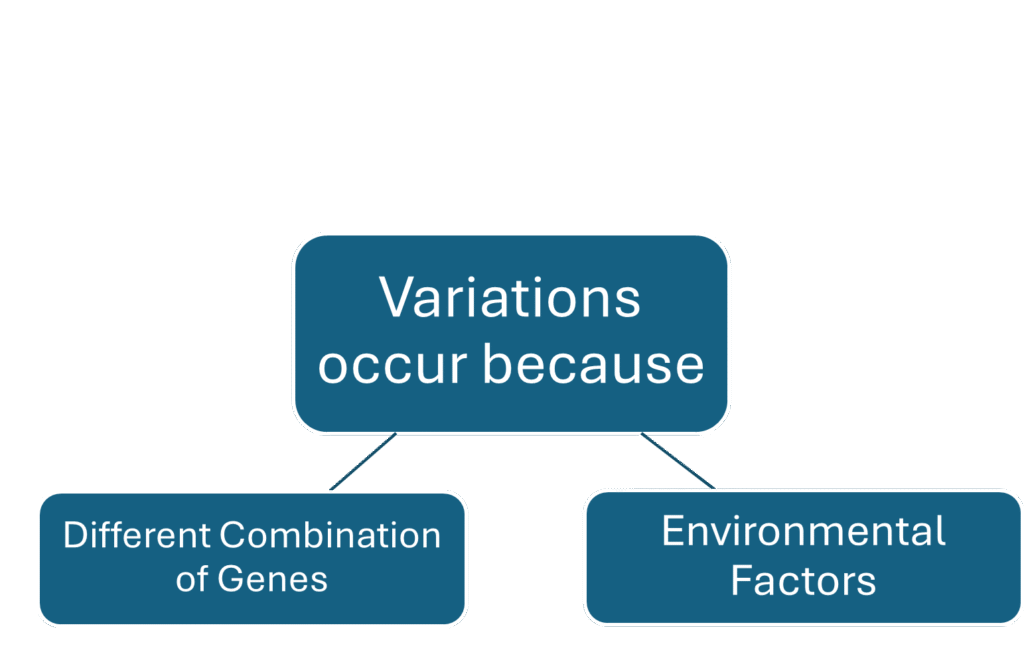
*Importance of Variation
Variations are essential because they:
- Help organisms adapt to their surroundings.
- Increase chances of survival in changing environments.
- Are responsible for evolution, as new traits get passed over generations.
TRAITS
Traits are the specific characteristics or features of an organism. They decide how an organism looks, behaves, or functions. Each trait is determined by a pair of genes.
Examples: Eye colour, height, hair type, skin colour, blood group, etc.

*Difference Between Inherited Traits and Acquired Traits
| Basis | Inherited Traits | Acquired Traits |
| Meaning | Traits that are passed from parents to offspring through genes. | Traits that an organism develops during its lifetime due to environment or experience. |
| Cause | Caused by genetic information (DNA). | Caused by environment, habits, lifestyle, training, etc. |
| Present From Birth | Yes, inherited traits are present from birth. | No, they develop after birth. |
| Transfer to Next Generation | Yes, inherited traits can be passed to offspring. | No, acquired traits are not passed to offspring. |
| Examples | Eye colour, hair type, height tendency, blood group. | Learning to swim, bodybuilding, scars, tanning of skin. |
| Role in Evolution | Play a major role in evolution as they are heritable. | Play little or no role in evolution because they aren’t inherited. |
| Based On | Genes and alleles. | Environment and personal experience. |
| Controlled By | Genes on chromosomes. | External factors and lifestyle. |
SOME IMPORTANT TERMS
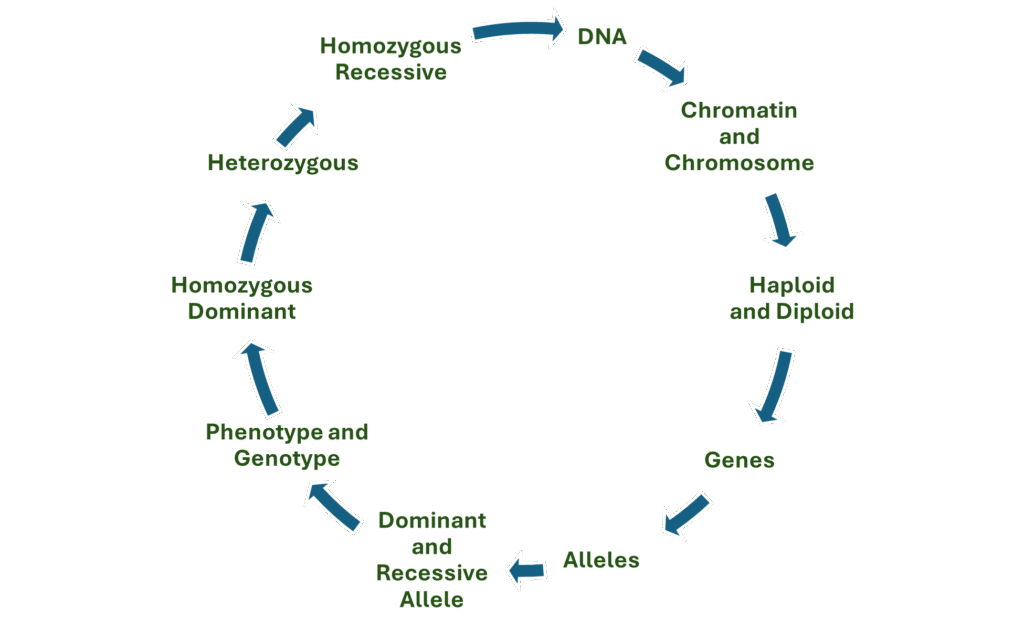
DNA
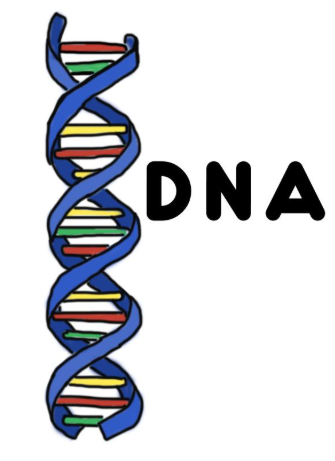
DNA stands for Deoxyribonucleic Acid.
DNA is the chemical substance present in the nucleus of every cell. It is a double stranded thread like structure.
DNA carries all genetic information that decides the traits of an organism.
DNA is made up of – Sugar, Phosphate, and Nitrogenous Bases.
It passes from one generation to another.
Chromatin and Chromosomes
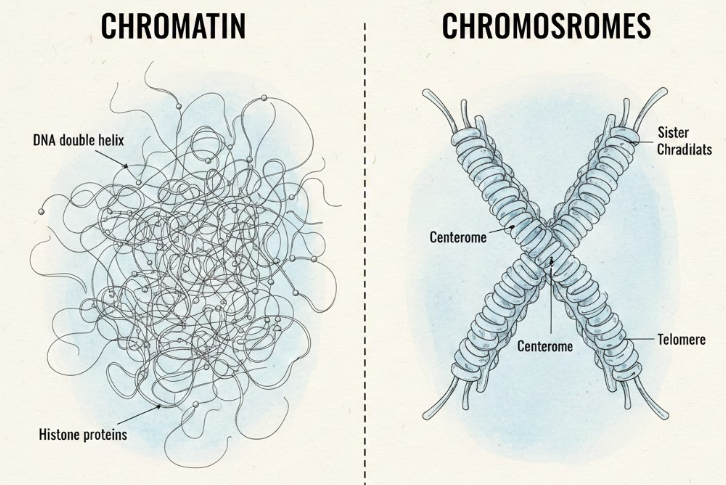
When DNA is in scattered form – this structure is called Chromatin.
At the time of Cell Division, Chromatin get condensed. This structure of DNA is called Chromosomes.
| Basis | Chromatin | Chromosomes |
| Definition | Long, thin, thread-like structure made of DNA and proteins. | Condensed, thick, rod-like structure formed from chromatin. |
| Appearance | Looks like loose threads. | Looks like thick rods. |
| Visibility | Not visible clearly under a microscope. | Clearly visible during cell division. |
| State of Cell | Present in non-dividing cells. | Present during cell division (mitosis/meiosis). |
| Structure | Uncoiled and extended. | Highly coiled and condensed. |
| Function | Allows gene expression, DNA replication, and packaging. | Ensures accurate distribution of DNA to daughter cells. |
| Composition | DNA + proteins (histones). | Tightly packed chromatin fibres. |
| Genes | Genes are present but loosely arranged. | Genes are arranged in a fixed order along chromosome arms. |
*Chromosome Number
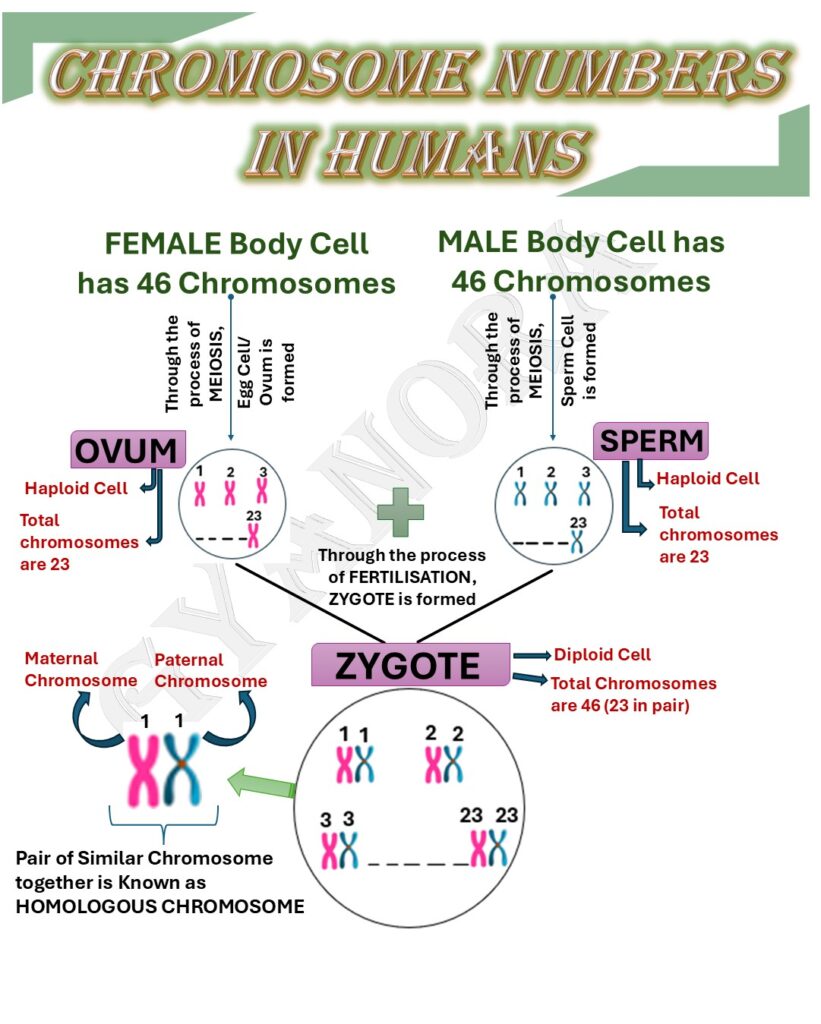
– Chromosome number helps in maintaining genetic stability across generations.
– Humans have 46 chromosomes (arranged in 23 pairs)
– Out of these:
- 22 pairs → control body characteristics
- 1 pair → Sex chromosomes (XX in females, XY in males)
– All Cells of Human body are Diploid except Gametes.
– Gametes (sperm cell and egg cell) are Haploid Cells.
HAPLOID AND DIPLOID
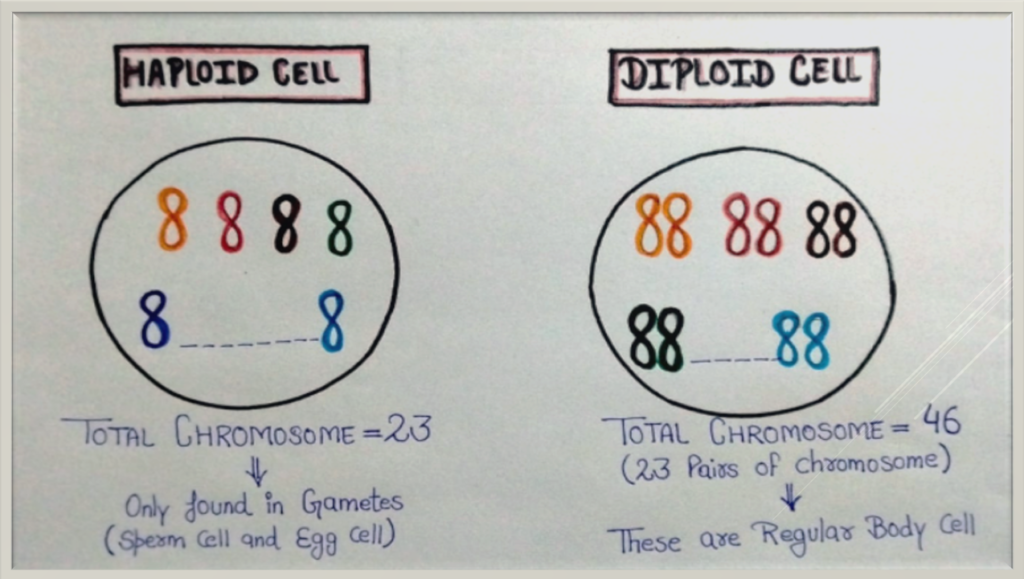
A living organism’s cells have a set number of chromosomes. This number determines whether a cell is haploid (n) or diploid (2n).
*Haploid
- Haploid cells contain only one set of chromosomes. It means, this type of cells contains 23 chromosomes.
- It is represented by ‘n’
- Formed by meiosis (a special type of cell division).
- These types of cells are only Gametes (sperm cell and egg cell).
- For Example: Human sperm cell as well as human egg cell contains 23 chromosomes (n) each.
- During fertilisation, sperm (n) + egg (n) combine to form a zygote (2n).
*Diploid
- Diploid cells contain two sets of chromosomes — one set from the mother and one from the father.
- It is represented by ‘2n’
- These are regular body cells (somatic cells).
- Formed by mitosis (normal cell division).
- It contains chromosomes in pairs.
GENES
A gene is a unit of heredity composed of DNA that regulates the expression of a specific trait in an organism. Genes are hereditary units on chromosomes that contain coded information (DNA instructions) for protein production, which determines an organism’s traits and characteristics.
In simple words, Genes are small segments of DNA that carry information for a specific trait and are passed from parents to their children.
A gene is basically a set of instructions that tells the body how to acquire a particular trait (such as eye color, height, hair type, and so on).
Genes are found inside the nucleus of every cell and sit on chromosomes in a fixed, specific position called a locus.
Humans have 20,000 to 25,000 genes approximately. These are spread across 23 pairs of chromosomes.
ALLELES
In genetics, every trait in our body is controlled by two types of a gene called alleles—one inherited from the mother and the other from the father.
Allele is an alternative version or form of a gene. These are different variants of a gene that share the same location (locus) on homologous chromosomes. They are paired versions of a gene inherited from parents, with each allele carrying slightly different information, resulting in the formation of distinct features such as eye color, height, or hair type.
We have alleles because we inherit one chromosome from our mother and one from our father, and the genes on them are also paired.
Genes are the traits, whereas Alleles are Variations of the trait.
Difference Between Genes and Alleles
| Basis | Genes | Alleles |
| Meaning | A gene is a unit of heredity that controls a specific trait. | Alleles are different forms or versions of the same gene. |
| Role | Determines a particular character (like eye colour). | Determines the different expressions of that character (brown/blue eyes). |
| Count | Each trait has one gene. | Each gene exists in two allelic forms (one from each parent). |
| Location | Found at a fixed position on chromosomes. | Found at the same position (locus) on homologous chromosomes. |
| Examples | Gene for eye colour, gene for height. | B & b (brown and blue eye alleles), T & t (tall and short alleles). |
| Nature | General information-carrying unit. | Specific variations of that information. |
| Function | Controls basic development of traits. | Controls which form of the trait will be expressed. |

Dominant Allele
Dominant Allele is the stronger one from the two Alleles. It is the stronger form of a gene that expresses its trait even if only one copy is present.
It is always written in capital letters, such as A, B, or T, and it can hide the influence of a recessive allele.
It expresses itself in both condition – Homozygous condition (AA), and Heterozygous condition (Aa)
For example: The allele for brown eyes (B) is dominant, so a person with BB or Bb will have brown eyes.
Recessive Allele
Recessive Allele is the weaker form of a gene that expresses its trait only when both copies are recessive.
It is written in small letters like a, b, or t.
A recessive trait appears only when the individual has the genotype bb, indicating that no dominant allele exists to hide it.
It expresses itself only in Homozygous condition.
For Example: The blue eye colour allele (b) is recessive and shows up only in bb individuals.
Dominance occurs when the dominant allele generates a strong or functional protein, but the recessive allele creates a weak or no protein, resulting in an effect only observable when both alleles are recessive.
HOMOZYGOUS DOMINANT, HETEROZYGOUS, HOMOZYGOUS RECESSIVE
In genetics, each trait is determined by two alleles, one inherited from the mother and one from the father. Depending on the combination of these alleles, organisms can be homozygous dominant, heterozygous, or homozygous recessive.
*Homozygous Dominant
An organism is said to be homozygous dominant when it has two identical dominant alleles for a trait. Since both alleles are dominant, the dominant trait is always expressed.
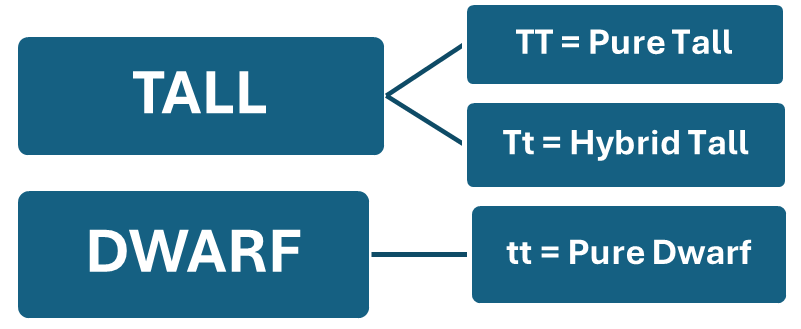
For example: TT – Tall pea plant, BB – Brown eyes
*Heterozygous
An organism is called heterozygous when it has two different alleles for a trait — one dominant and one recessive. Even in this condition, the dominant allele expresses itself, and the recessive allele remains hidden.
For example: Tt – Tall pea plant, Bb → Brown eyes
*Homozygous Recessive
An organism is homozygous recessive when it has two identical recessive alleles for a trait. In this case, the recessive trait is expressed because there is no dominant allele to mask it.
For example: tt – Short pea plant, bb – Blue eyes
PHENOTYPE AND GENOTYPE
In genetics, every trait we see in an organism is the result of two important concepts: genotype and phenotype.
*PHENOTYPE:
The Phenotype is the physical appearance or observable characteristic of an organism, such as eye colour, height, hair type, or skin shade.
Phenotype is what we actually see, and it is influenced by both – Genotype as well as Environmental factors.
For example, if a person has the genotype BB or Bb, their phenotype will be brown eyes, while the genotype bb results in the phenotype blue eyes.
*GENOTYPE:
Genotype refers to the genetic makeup of an organism. It is the set of alleles (gene versions) an organism carries for a particular trait.
It cannot be seen directly because it is present inside the genes, and is usually written using letters like BB, Bb, or bb. This genotype decides the potential of a trait.
*Example for better understanding:
Let us take eye colour in humans as an example. The allele for brown eyes (B) is dominant, while the allele for blue eyes (b) is recessive. If a person has the genotype BB or Bb, the phenotype will be brown eyes because the dominant allele expresses itself. Only when the genotype is bb will the person have blue eyes. This shows how genotype controls the trait, while phenotype shows the visible result.
MENDEL AND HIS CONTRIBUTION
Gregor Johann Mendel, an Austrian scientist and monk, established the foundation of modern genetics. He is often regarded as the “Father of Genetics” since his research helped the world understand how features are passed down from parents to offspring.
Between 1856 and 1863, Mendel conducted research on pea plants (Pisum sativum). He chose pea plants because they were easy to grow, had a short life cycle, and displayed numerous distinguishing characteristics such as tall and short plants, round and wrinkled seeds, and yellow and green seeds. These obvious distinctions aided Mendel in observing inheritance patterns clearly.
Gregor Mendel conducted hybridisation experiments on pea plants (Pisum sativum) to learn how features are passed down from parents to offspring. Mendel’s hybridisation experiments primarily consisted of two types of crosses: monohybrid cross, in which inheritance of a single feature such as tall and short plants was researched, and dihybrid cross, in which two qualities such as seed shape and seed colour were studied simultaneously. Mendel’s experiments helped to explain the ideas of dominant and recessive features, as well as the basic laws of heredity that serve as the foundation for genetics.
Although Mendel published his findings in 1866, his work was not acknowledged during his lifetime. It was discovered about 1900, and his work garnered worldwide recognition.
*MONOHYBRID CROSS
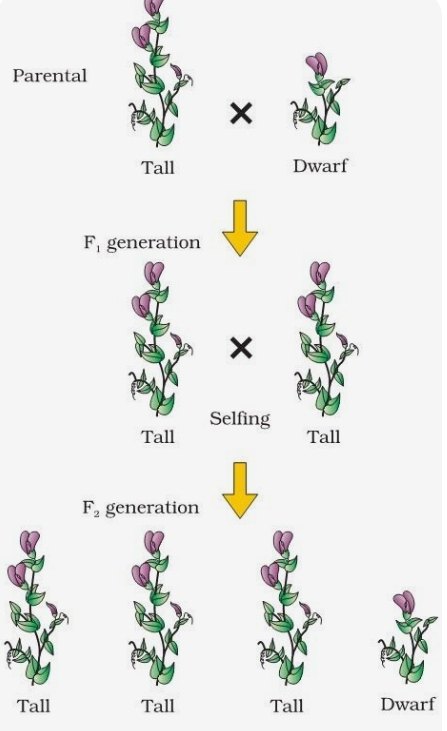
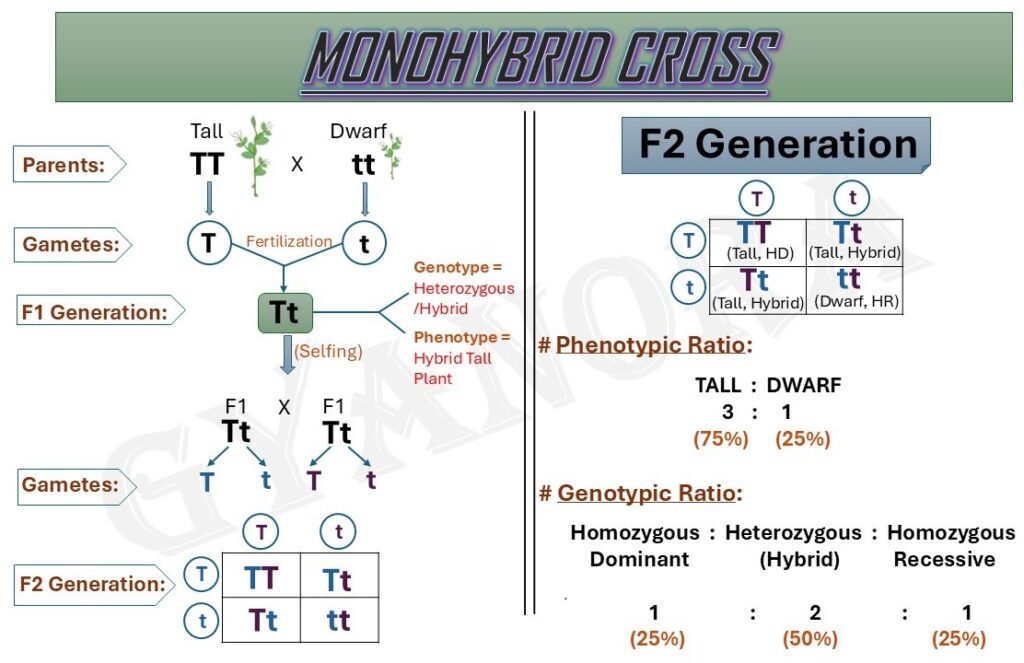
A monohybrid cross is a genetic cross in which just one attribute is examined at a time. Gregor Mendel used monohybrid crosses to investigate how a single pair of distinct traits is passed down from parents to offspring. This experiment allowed him to explain the fundamental laws of heredity.
In his first monohybrid cross, Mendel crossed a pure breed tall plant and a pure breed dwarf plant.
*DIHYBRID CROSS
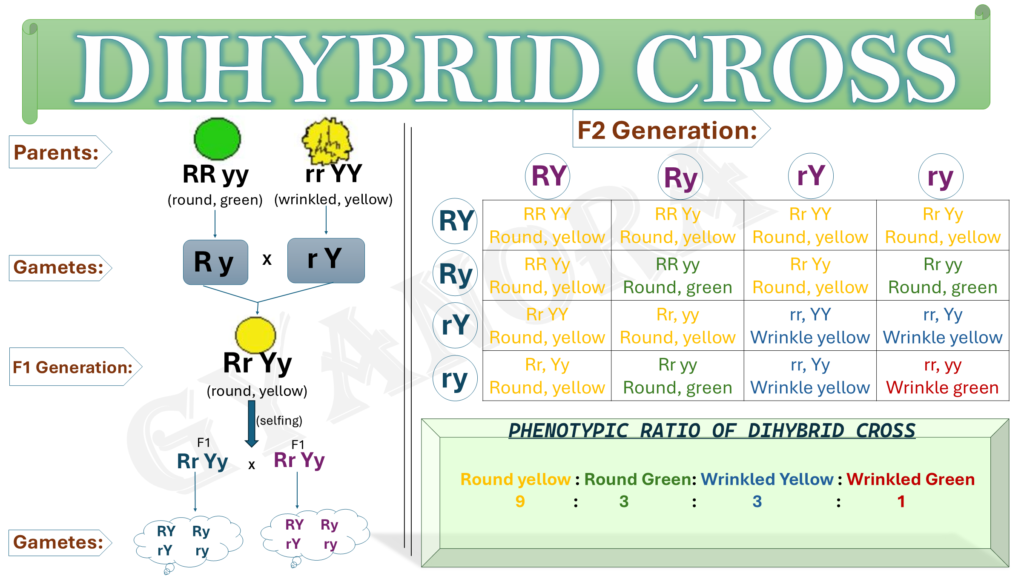
A dihybrid cross is a genetic cross in which two distinct features are researched simultaneously. Gregor Mendel employed dihybrid crosses to investigate how two contrasting features are passed down from parents to offspring. This experiment helped Mendel to explain the Law of Independent Assortment. Mendel chose two features in pea plants: seed shape (round (R) and wrinkled (r)), and seed colour (yellow (Y) and green (y).
*MENDEL’s LAW OF INHERITANCE
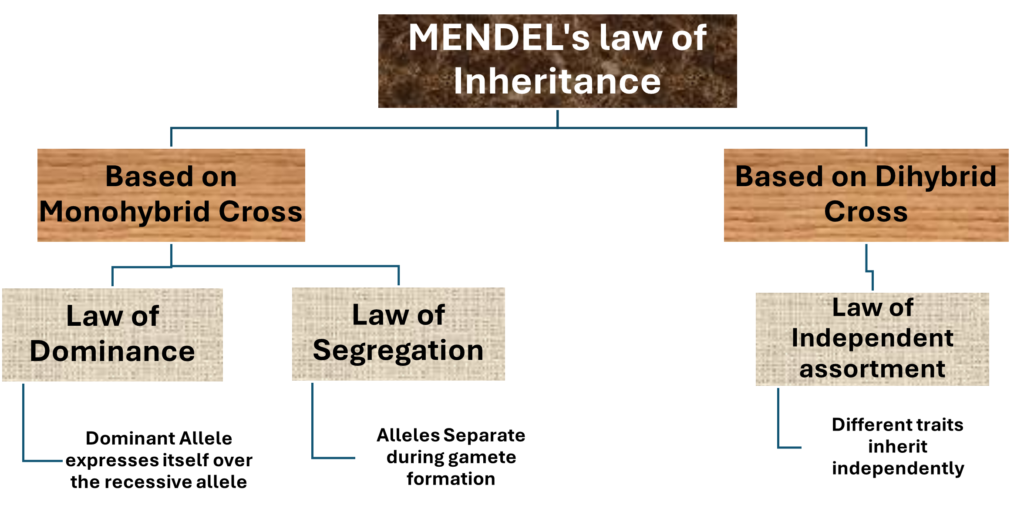
From the above two experiments – Monohybrid cross, and Dihybrid cross – Mendel concluded the three laws, which are known as Mendel’s law of Inheritance. These laws explain how traits are passed from parents to offspring and form the foundation of modern genetics.
SEX DETERMINATION
Sex determination is the biological process by which the sex of an individual (male or female) is decided.
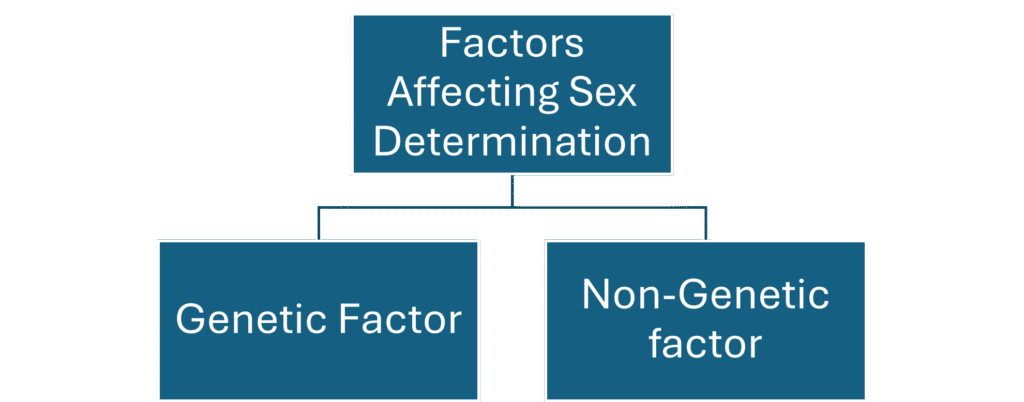
Different living organism’s sex is depending on two factors:
1. Genetic Factor:
In humans and many animals, sex is determined at the time of fertilisation and depends on the type of sex chromosomes present.
2. Non-Genetic Factor:
In some organisms, sex is not decided by chromosomes but by environmental factors.
For example:
- Temperature decides sex in some reptiles (e.g., turtles, crocodiles).
- Hormones affect sex expression in some plants.
- Environmental conditions influence sex in certain fishes.
- In Snails, individual can change Sex.
*HUMAN CHROMOSOMES
Human Chromosomes are divided into two category – AUTOSOMES, and ALLOSOMES.
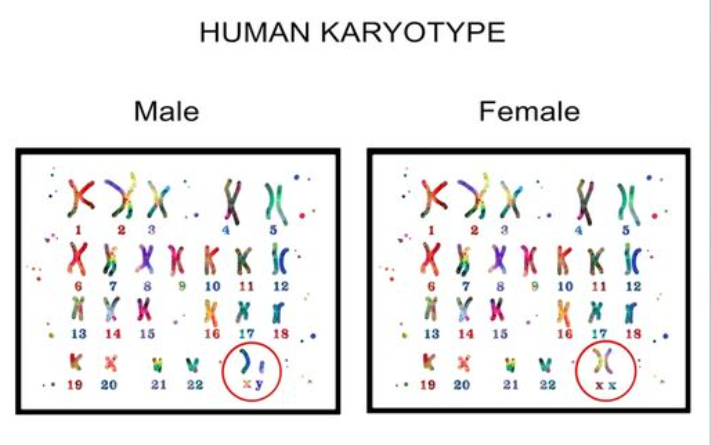
AUTOSOMES: Autosomes are the chromosomes that control all body characteristics except sex. They carry genes responsible for traits such as height, skin colour, eye colour, blood group, and metabolism. In humans, there are 22 pairs of autosomes (44 chromosomes) present in both males and females.
ALLOSOMES (Sex Chromosome): Allosomes are the sex chromosomes that are responsible for determining the sex of an individual. They also carry genes related to sex-linked traits. In humans, there is one pair of allosomes – in female (XX), in male (XY). Both males and females have the same number of autosomes, but they differ in allosomes, which is why sex is different.
*SEX DETERMINATION IN HUMAN BEING
Sex determination in humans is the process of determining whether a child is male or female. In humans, sex is decided genetically at the time of fertilization and is determined by the combination of sex chromosomes obtained from both parents.
Females have two similar sex chromosomes (XX), while males have two different sex chromosomes (XY).
The mother always contributes an X chromosome through the ovum.
The father contributes either an X or a Y chromosome through the sperm.
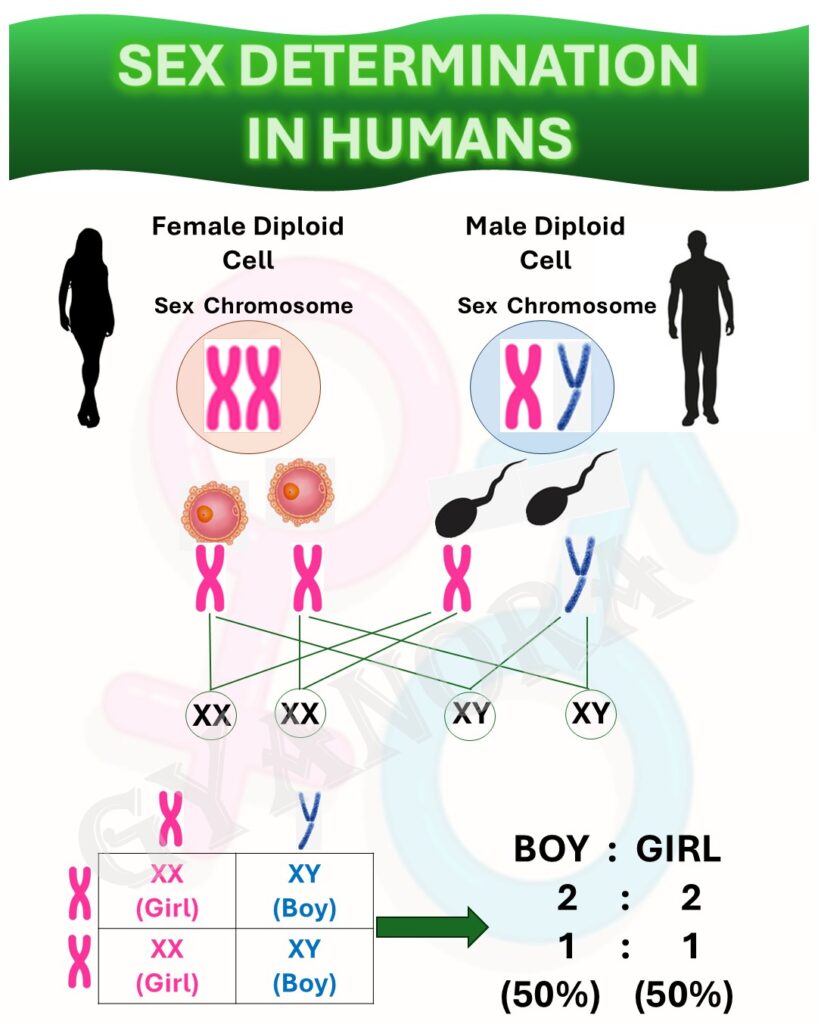
Hence, the father is responsible for determining the sex of the child, not the mother.
CONCLUSION
The study of sex determination in humans clearly demonstrates that both the mother and the father participate equally, but the child’s sex is determined by the father’s chromosome rather than the mother’s. Science clearly demonstrates that girls are not responsible for their gender, and blaming mothers for the birth of a girl is both incorrect and unscientific.
Every child, whether male or female, is the product of natural genetic processes and is equally important. Girls are not a burden; they are a source of strength for society. Understanding heredity not only enhances scientific knowledge, but it also teaches us respect, equality, and responsibility. A society that honors girls has a deep understanding of science and humanity.
Enhance your revision by practicing Question Answers for your Board Exams:
Do visit our Q/Ans Website (QnA.gyanora.in) – https://qna.gyanora.in/