Download Pdf (Link given below)
PRINT IN CHINA
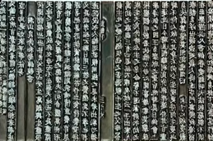
- From 594 AD >> Printed by Rubbing Paper against the inked surface of wood
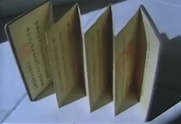
- PROBLEM – Pages were thin and porous. Hence, both sides of sheet can’t be printed.
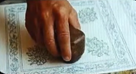
- SOLUTION – Sheets were folded and stitched at the sides
*HUGE DEMAND OF BOOKS IN CHINA
i. Demand for Civil Services Examination. Only people who were preparing for this exam, would demand for books.
ii. By 17th Century, dur to growing Urban Culture, use of print expanded.
iii. Books like – Fictional Books, and Romantic Plays – were in demand.
iv. Women also become Reader as well as publisher of books.
# SHANGHAI – become hub of Western Style School of Printing
PRINT IN JAPAN
- From 768-770 AD
- Hand-printing Technology was introduced by Buddhist Missionaries from China
- Oldest Japanese Book – DIAMOND SUTRA (of Buddhist)
- About DIAMOND SUTRA:
- Printed in 868 AD
- Contain only 6 sheets.
*IMPORTANT INFORMATION
i. By 13-15 century, diversification of Print in Japan was started.
ii. Books were printed in huge quantity which make them cheaper.
iii. KITAGAWA UTAMARO – He is famous for his Art called UKIYO
- About UKIYO: Art that showing Ordinary human experiences.
# EDO (TOKYO) – become hub of printing in Japan
PRINT IN KOREA
Famous book of Korea – JIKJI
About JIKJI
- Oldest Existing Book
- Printed with movable Metal type
- 1st JIKJI was printed in 1377
- Related to ZEN BUDDHISM (extreme level of Buddhism)
PRINT COMES TO EUROPE
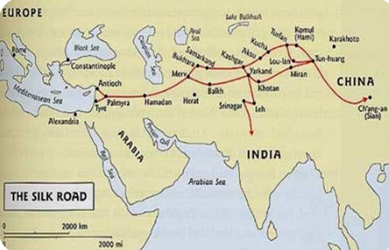
Chinese Paper reached Europe Via SILK ROUTE. But Print was not famous in Europe.
- PROBLEM – Hand Print, which takes too much time to print
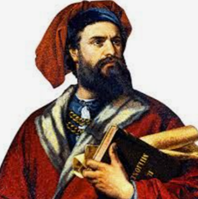
- SOLUTION – In 1295, MARCO POLO returned to Italy and bought the technology of WOOD BLOCK PRINTING from China.
*For Ordinary People – Wood Block Printing Books were available, as they were cheap.
*For Rich People – Books made with VELLUM, which is most expensive.
>> VELLUM – a high quality, smooth printing surface made from scrapped animal skin.
GUTENBERG AND THE PRINTING PRESS
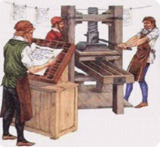
- Olive Press provided the model for new Printing press and moulds were used for casting letters.
- He developed first printing press in 1430’s.
- The first book Printed was BIBLE.
THE PRINT REVOLUTION
| Aspect | Before the Print Revolution | After the Print Revolution |
| Production of books | Books were handwritten by scribes, so production was slow. | Books were printed using printing presses, increasing speed. |
| Cost of books | Books were very expensive and affordable only to the rich. | Printed books became cheaper and affordable for many people. |
| Availability | Very few books were available due to manual copying. | Large numbers of books were produced and widely available. |
| Access to knowledge | Knowledge was limited to elites, clergy and scholars. | Knowledge reached common people, students and workers. |
| Literacy level | Literacy rate was low due to lack of books. | Literacy increased as books became easily available. |
| Language used | Most books were written in Latin. | Books were printed in vernacular (local) languages. |
| Spread of ideas | New ideas spread slowly from person to person. | Ideas spread quickly through books, pamphlets and newspapers. |
| Education | Education was limited and not widespread. | Education expanded with textbooks and printed material. |
| Social impact | There was little discussion or public debate. | Public opinion developed and debates increased. |
IMPACT OF PRINT REVOLUTION
1. EMERGENCE OF NEW READER
- Due to Print Revolution, multiple copies of books were available to all. This would increase the number of Readers.
- Books were now read individually. Before that, only those who have books can read for the public.
- Literacy Rate slowly increased.
2. RELIGIOUS DEBATES AND FEAR OF PRINT
- People started sharing their ideas.
- MARTIN LUTHER’s Ninety-five Theses was published in 1517. In this he mentioned about misusing of power by clergy.
- Scholars like ERASMUS, worried about rebellious ideas, which was spread through books.
3. PRINT AND DISSENT
- Diverse interpretation among people.
- MENOCCHIO – Challenges Church teaching
- Church impose strict control to restrict dissent, by 1558 Index of prohibited Books.
READING MANIA
It refers to dramatic surge in literacy and demand for books, driven by rising education rates and cheap, accessible printed materials.
*Effects of Reading Mania
- In Europe, Literacy Rates increased by 80%.
- In England, spread of PENNY CHAPBOOKS.
- In France, BIBLIOTHEQUE BLEUE were sold, which were the low-priced books.
- Ritual Calendars were sold.
- Knowledge Books in demand.
DOWNLOAD PDF of this Short Notes from telegram channel – CLICK HERE
POWER OF PRINT
- Books changed the World
- LOUISE SEBASTIEN MERCIER – said – “Printing press is the most powerful engine of progress”
PRINT CULTURE AND THE FRENCH REVOLUTION
“Print culture created the conditions within which French Revolution occurred”
Suitable Arguments:
- Spreading the ideas of Enlightenment Thinkers:
- Reason and Intellect
- Attacked the authority of church
- Dialogue and Debate started:
- People started thinking
- Reason and logics
- Flow of literature that insulted Royality.
19th CENTURY
1. CHILDREN
- Primary Education became compulsory
- School Textbooks in demand
- Children’s Press was set up in France in 1857
2. WOMEN
- Bacome readers as well as writers
- Penny Magazines specially made for them
- Famous writers – Jane Austen, Bronte Sisters, George Eliot
3. WORKERS
- Lending Libraries for them
- Working hours reduced for self improvements
FURTHER INNOVATIONS IN PRINTING
1. Power-Driven Cylindrical press
- By Richard M. Hoe
- Print 8000 sheets per hours
2. Offset press
- Print 6 colors at a time
3. Photoelectric Controllers
4. Dust Cover / Book Jacket
DOWNLOAD PDF of this Short Notes from telegram channel – CLICK HERE
INDIA AND THE WORLD OF PRINT
*PRINT COMES TO INDIA
- 1st came to GOA with Portuguese
- 1st Tamil Book – in 1579
- 1st Malayalam Book – in 1713
- From 1780, Bengal Gazette was edited by James Augustus Hickey
- 1st Indian Newspaper – Bengal Magazine – by Gangadhar Bhattacharya
*RELIGIOUS REFORM AND PUBLIC DEBATES
- Hindu Orthodoxy V/s Religious Reformers
- Religious Reformer RAMMOHAN ROY wrote – SAMACHAR KAUMUDI
- Hindu Orthodoxy wrote – SAMACHAR CHANDRIKA
- Persian Newspaper – Jam-i-Jahan Nama and Shamshul Akhbar
- Tulsidas’ Ramcharitmanas – first printed in 1810, Calcutta
*NEW FORM OF PUBLICATION
Visual Culture – by Raja Ravi Verma
*WOMEN AND PRINT
- Rashsundari Debi – wrote her autobiography – AMAR JIBBAN
- Tarabai Shinde and Pandita Ramabai – wrote about upper caste widows
*POOR AND PRINT
- Jyotiba Phule – wrote GULAMGIRI (in 1871) – about injustice of caste system
- Kashibaba – wrote ‘chhote aur bade ka sawal’
*PRINT AND CENSORSHIP
- In 1878 – Vernacular Press Act
- Balgangadhar Tilak – wrote KESARI in 1907
DOWNLOAD PDF of this Short Notes from telegram channel – CLICK HERE
Explore other chapter’s NOTES – CLICK HERE or visit Gyanora.in
For Practicing chapter wise question answers – CLICK HERE or visit QnA.Gyanora.in
Follow us on:
YouTube: www.youtube.com/@Gyanora
Telegram: t.me/gyanora
Instagram: https://www.instagram.com/gyan_ora?igsh=aDQxbDk1aDdleHJ6