INTRO- GLOBALIZATION
Globalization means the process of integration or interconnection between countries through the movement of goods, services, people, capital (money), and information. In simple terms, it is the process that turns the world into one large market — where countries are connected economically and culturally.
“Globalization is the process by which the world’s economies, societies, and cultures are becoming interconnected through increased cross-border trade, investment, and communication.”
Globalization has grown to include far more than just trade. This includes:
- International trade involves the flow of products and services.
- Flow of capital (money): international investment and loans
- Flow of information and technology
- Flow of people: migration for job or study.
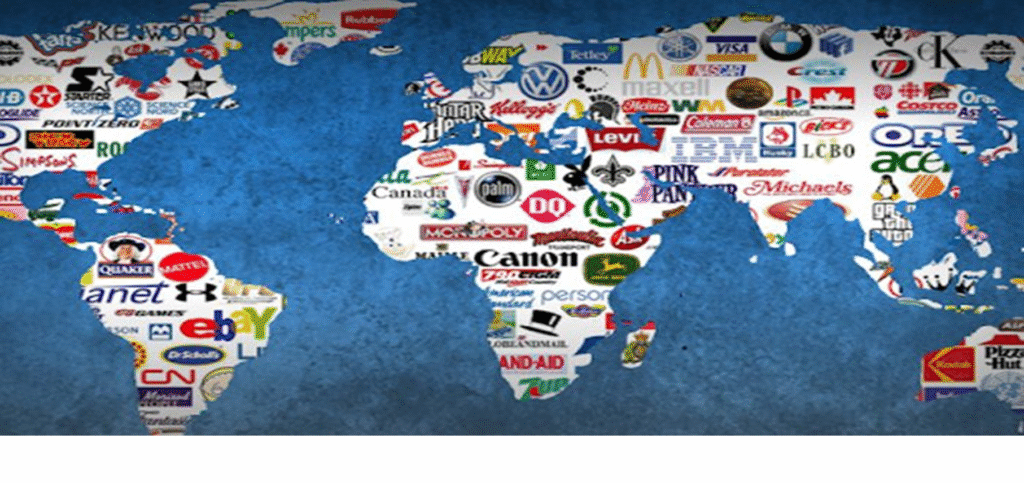
Multinational Corporations (MNCs) are the main driving force behind globalization. MNCs play a central role in connecting national economies and spreading globalization.
MULTINATIONAL CORPORATIONS (MNCs)
An MNC is a company that owns or controls production and business operations in more than one country. It is also known as Transnational Corporation.
*Aims / Objectives of MNCs
- To maximize profits by expanding markets globally.
- To produce goods efficiently using global resources (labour, capital, technology).
- To reduce production cost by locating units where:
- Labour is cheap,
- Raw materials are easily available, and
- Government rules are business-friendly.
- To capture foreign markets by setting up production and distribution centres.
*Role of MNCs in Globalization
- Spread of Production:
- MNCs spread production to many countries, making globalization possible.
- Foreign Investment (FDI):
- They bring Foreign Direct Investment, which strengthens the host country’s economy.
- Technology Transfer:
- They bring modern machines, skills, and knowledge to developing countries.
- Global Trade Links:
- MNCs connect local producers to international markets.
- Employment Generation:
- MNCs create jobs in the host country (especially in manufacturing and services).
- Improvement in Product Quality:
- Competition from MNCs forces local producers to improve product standards.
*Benefits from MNCs to Local Companies
| Benefits | Explanation / Example |
| 1. Capital Investment | MNCs bring foreign money that helps local companies expand business and production. |
| 2. Transfer of Technology | Local firms get access to advanced machines and modern production methods. |
| 3. Better Skills and Standards | Workers and managers learn new techniques and improve quality of work. |
| 4. Increased Demand for Local Goods | MNCs buy raw materials and parts from local suppliers, creating new business. |
| 5. New Business Opportunities | Local small businesses grow as suppliers, transporters, or service providers. |
| 6. Access to Global Markets | Collaboration with MNCs helps local firms export goods and enter global trade. |
| 7. Improved Competitiveness | Local companies upgrade quality and efficiency to compete globally. |
IMPACT OF GLOBALIZATION
| Positive Impacts | Negative Impacts |
| 1. More foreign investment | 1. Unequal benefits |
| 2. Expanded markets | 2. Loss to small industries |
| 3. Advanced technology | 3. Job insecurity |
| 4. More employment | 4. Environmental damage |
| 5. Growth of Indian companies | 5. Cultural erosion |
| 6. Better quality & lower prices | 6. Rural sector left behind |
| 7. Global exchange of ideas | 7. Economic dependence |
FACTORS THAT ENABLED GLOBALIZATION
1. Rapid Improvement in Technology
- Technology is the main driving force behind globalization.
- It has reduced the cost and time of movement of goods, services, and ideas across the world.
2. Liberalization of Foreign Trade and Investment Policy
- Countries removed or reduced trade barrier restrictions, this process is known as liberalization. Liberalization made it easier for Goods and services to be traded across countries.
3. Role of Multinational Companies (MNCs)
- MNCs spread production and markets across countries.
4. Growth of Communication Networks
- Advanced communication tools — such as emails, video conferencing, and instant messaging — enable people and businesses to connect globally.
5. Development of Global Financial Systems
- Globalization has been supported by the growth of international banking, stock markets, and financial institutions.
6. Trade Agreements and International Organizations
- Various international organizations and agreements have promoted free and fair global trade.
- The World Trade Organization (WTO) plays an important role in setting rules for trade between countries.
7. Political and Economic Reforms in Developing Countries
- For example: India’s 1991 economic reforms (LPG Policy – Liberalization, Privatization, Globalization).
NEW ECONOMIC POLICY 1991
It was Introduced in 1991 by the government of India under Prime Minister P. V. Narasimha Rao and Finance Minister Dr. Manmohan Singh.
The New Economic Policy of 1991 marked a major turning point in India’s economic history. It shifted India from a closed and controlled economy to an open and market-oriented economy.
Reason: India faced a serious economic crisis – low foreign exchange, high inflation, and high debt.
The main feature of NEP 1991 was LPG policy – Liberalization, Privatization, Globalization.