Introduction – Natural Phenomena
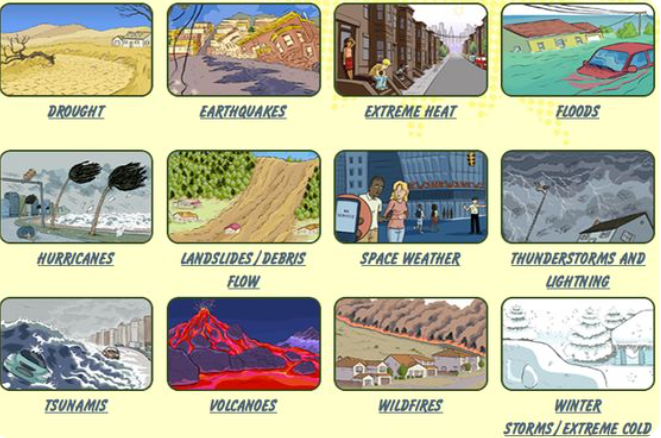
Natural Phenomena are the events or occurrences that happen in nature without human control. Some of them are beautiful and helpful (like rainbows), while others can be dangerous or harmful (like earthquakes, lightning, or cyclones).
Electric Charges
Every object is made up of tiny particles called atoms.
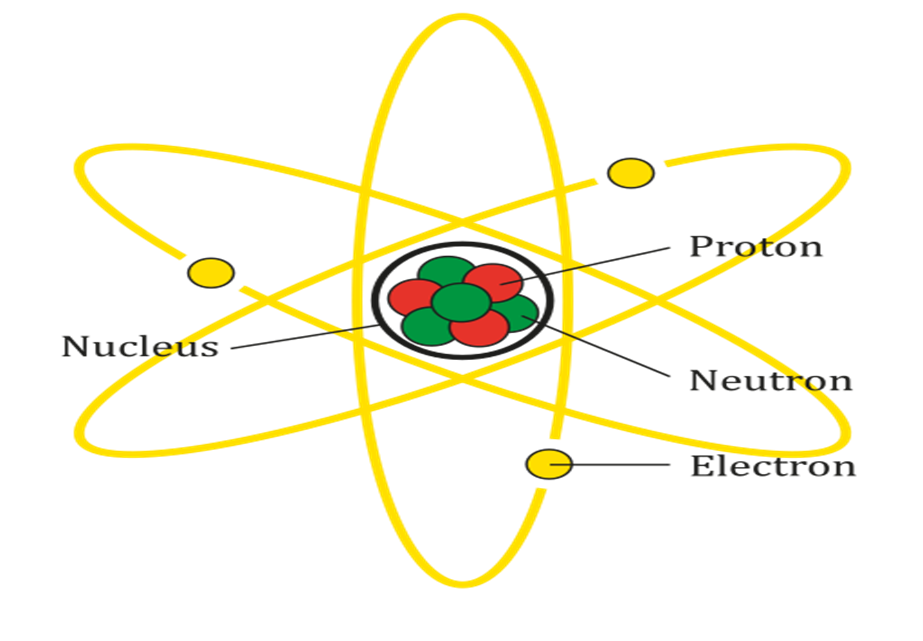
-Atoms contain electrons (–ve), protons (+ve), and neutrons (neutral).
- Protons → Positive charge (+)
- Electrons → Negative charge (–)
- Neutrons → No charge (neutral)
-When an object loses or gains electrons, it becomes electrically charged.
- Loses electrons → Positive charge (+)
- Gains electrons → Negative charge (–)
*Type of Charges
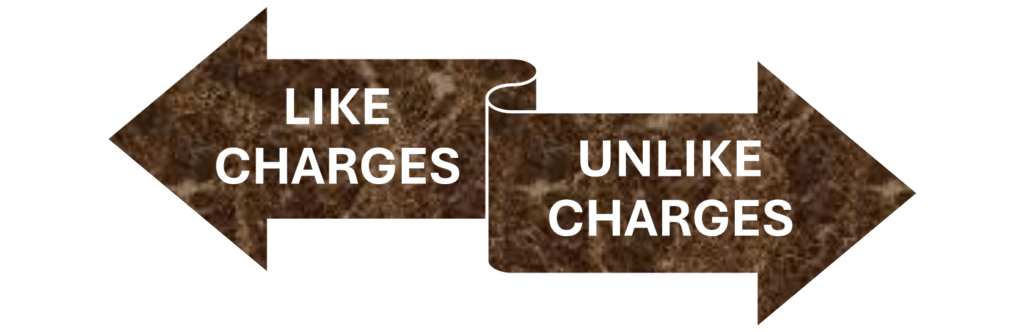
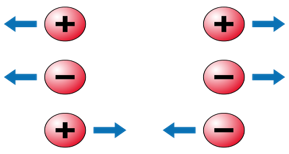
- Like Charges: Repel each other
- (+,+), (-,-)
- Unlike Charges: Attract each other
- (+,-), (-,+)
*Methods of Charging
There are two main methods by which objects can be charged:
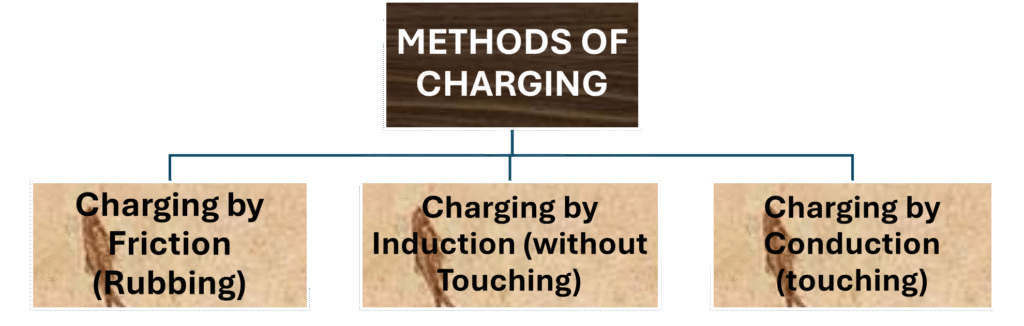
1. Charging by Friction (Rubbing)
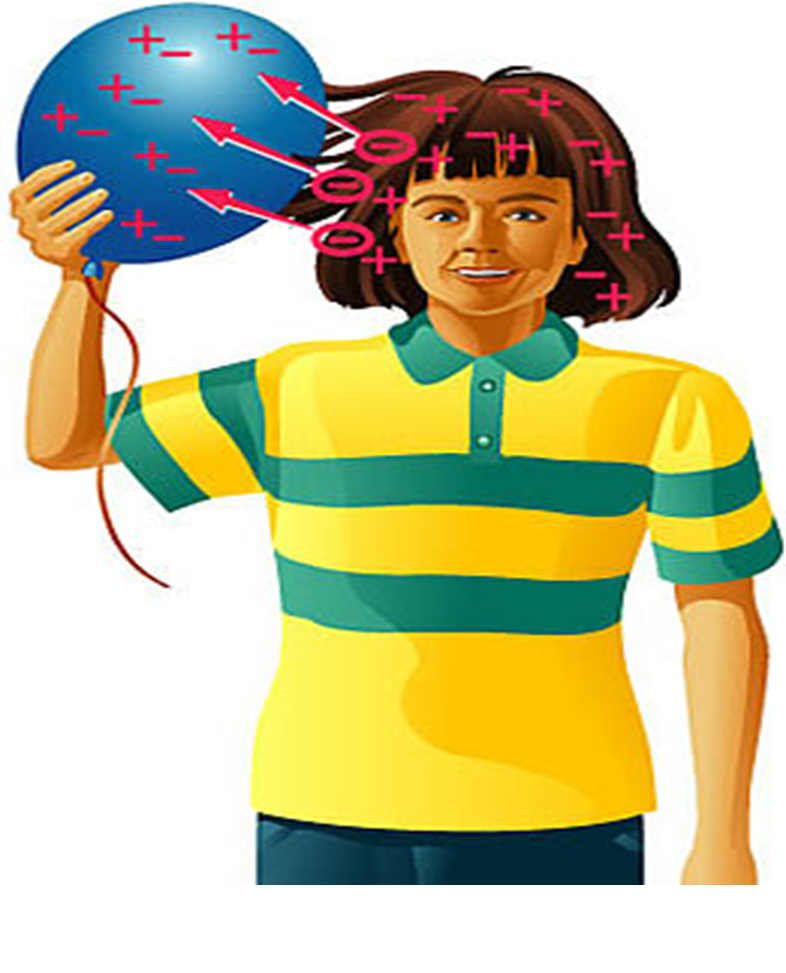
Friction (Rubbing) causes electrons to transfer from one substance to another. One becomes positively charged, while the other becomes negatively charged.
- NOTE: Friction causes transfer of electrons, not protons
–Example: Use a plastic scale or balloon on dry hair:
- Balloon gains electrons, resulting in negative charge (-).
- Hair loses electrons resulting in positive charge (+).
-Real-life examples:
- Clothes sticking together after drying.
- Sparks while removing sweater in dark.
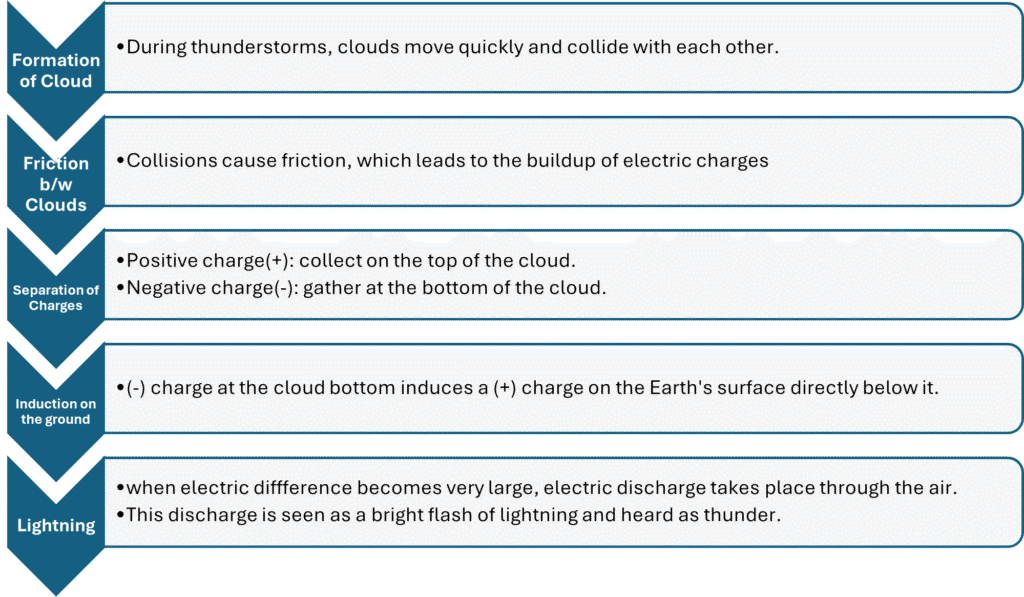
- Lightning – the biggest example of natural frictional charging between clouds
2. Charging by Induction (Without Touching)
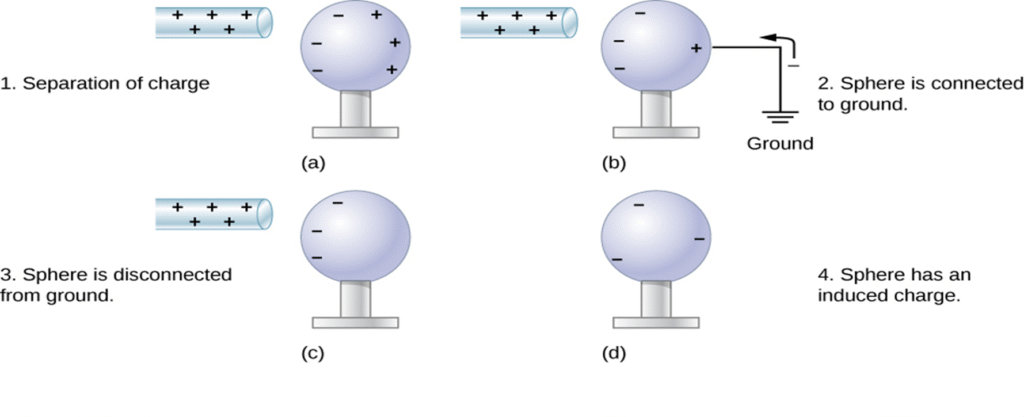
Charging a neutral object without touching it by simply bringing a charged object close to it. The charged body’s electric field causes the charges inside the neutral object to rearrange themselves.
-Example: Bring a negatively charged rod near to a neutral metal ball.
- Electrons in the ball move away → the near side positive and the distant side negative.
- When you earth the ball (connect it to ground), extra electrons flow out.
- Remove the earth connection, then the charged rod:
The ball is now positively charged—without touching.
3. Charging by Conduction (Touching)
When a charged object touches a neutral object, charges are directly transferred by contact. In conduction, the neutral object always gets the same charge as the charged object.
- Electrons move from one body to another through direct contact.
- After touching, both bodies may get the same type of charge.
Example: If you touch a negatively charged balloon to a metal can, the can rolls due to gained electrons.
*Electroscope
An electroscope is a simple device used to detect the presence of electric charge on an object. It helps us find out whether a body is charged or uncharged, and if charged, it can show the nature (type) of the charge.
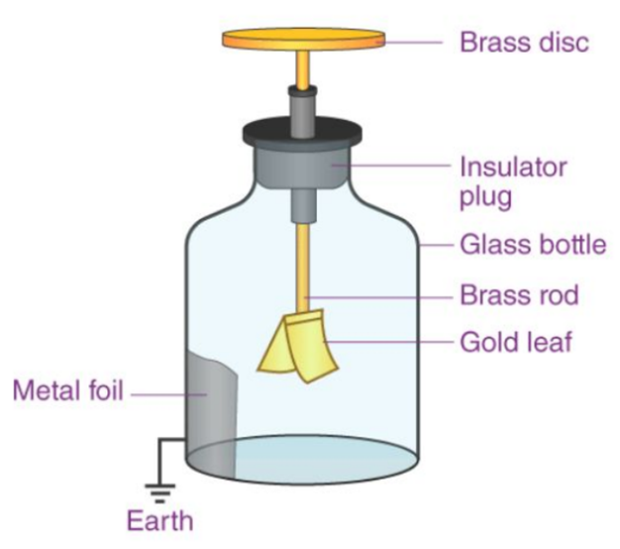
-PARTS:
- Metallic Rod: A conducting rod that connects the top knob to the leaves inside.
- Metal Knob (Disc): A flat, round metal plate at the top where you touch or bring the charged object.
- Gold Leaves: Two thin leaves of gold or aluminium foil attached to the bottom of the rod.
- Glass Jar: Protects the leaves from air movement and moisture.
- Insulated Stopper: Holds the rod in place and prevents charge leakage.
-Working of an Electroscope:
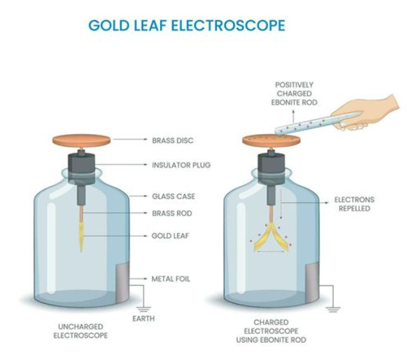
- Bring a charged object (say, a negatively charged rod) near the knob of the electroscope.
- The electrons in the metal rod and leaves move away from the knob (since like charges repel).
- The leaves get the same type of charge, so they repel each other and diverge (spread apart).
- The amount of divergence shows how strong the charge is.
- When the charged object is removed, the leaves come back together.
-Uses of an Electroscope:
1. Detecting Electric Charge:
- If leaves diverge → object is charged.
- If leaves don’t move → object is neutral.Se of charge.
2. Testing Conductors and Insulators:
- Connect the object → if leaves move → it conducts charge (conductor).
- If not → it’s an insulator.
Lightning
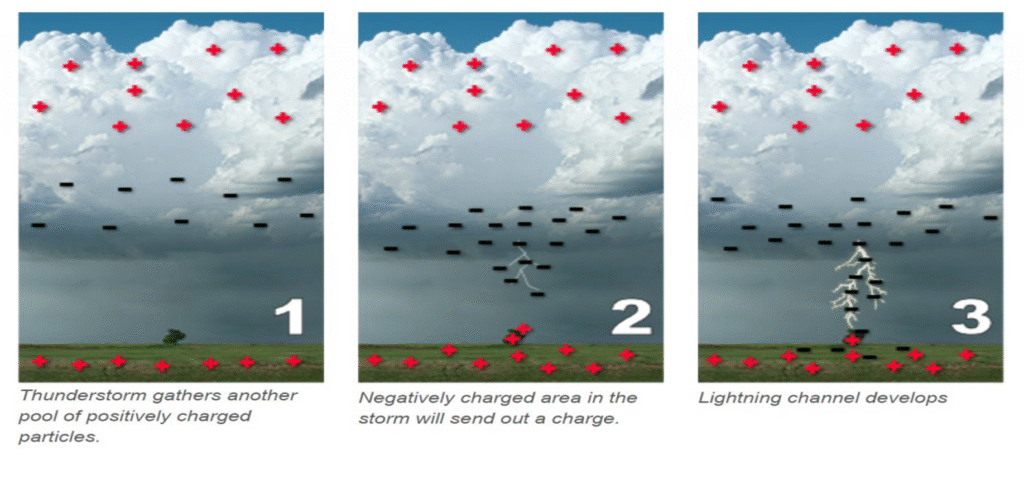
Lightning is a bright flash of light in the sky that occurs during a thunderstorm.
It is caused by the discharge of electric charges between clouds or between a cloud and the Earth.
*How is Lightning Produced?
*Benjamin Franklin’s Experiment
- Franklin flew a kite during a rainstorm with a metal key tied to the string.
- When lightning hit, an electric charge travelled down the wet string, resulting in sparks near the key.
- This demonstrated that lightning is an electrical phenomenon.
*Safety Measures During Lightning
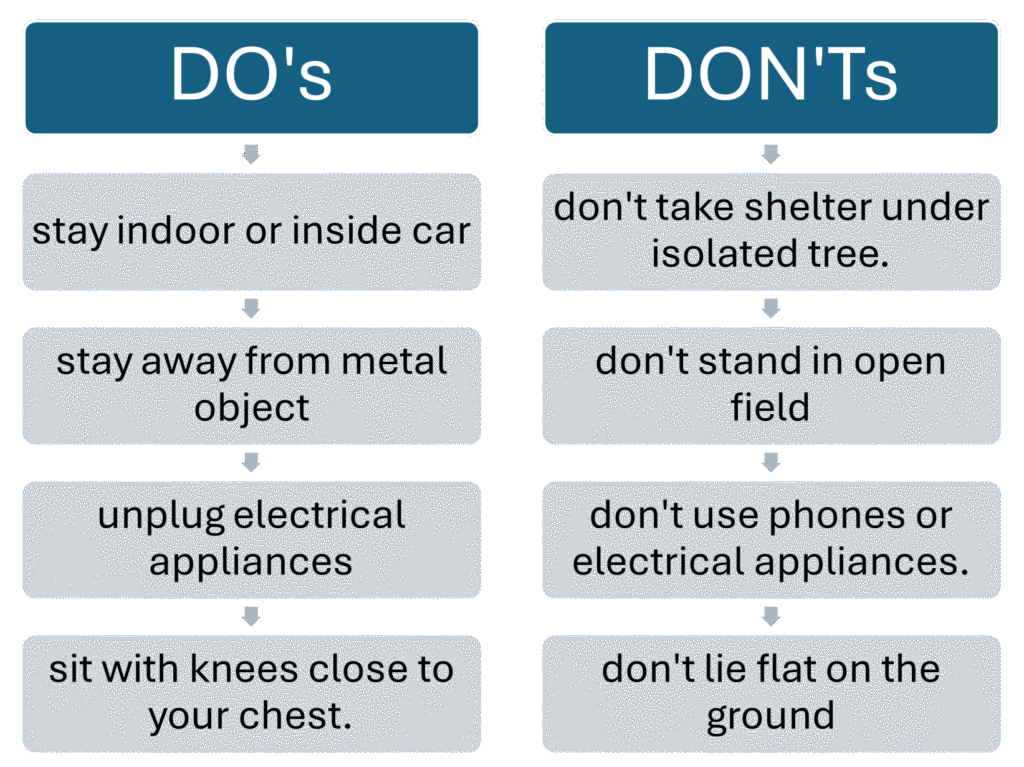
–Lightning Conductors
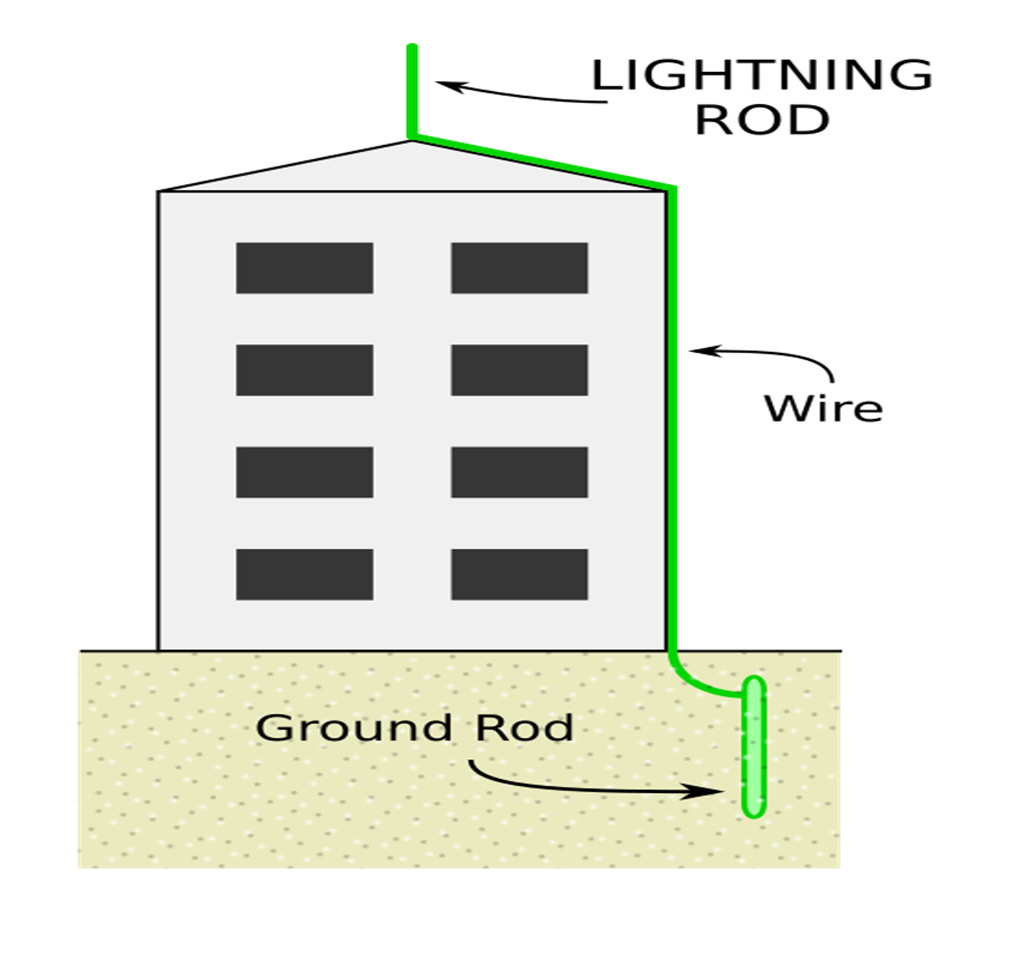
A lightning conductor is a metal rod fixed to tall buildings or structures to protect them from lightning strikes. Benjamin Franklin (in 1752) after his famous kite experiment
- It is made of copper or aluminium.
- The rod’s top end is pointed and fixed above the building.
- The bottom end is buried deep in the ground.
- When lightning strikes, the charge passes through the rod safely into the Earth, without damaging the building.
EARTHQUAKE
An earthquake is a sudden shaking of the Earth’s surface caused by the release of energy stored in the earth’s crust.
This energy is released as seismic waves that travel through the Earth.
Earthquakes can range from minor tremors (not felt) to huge destructive quakes.
Earthquake is measured by- Richter Scale. It Measures the magnitude (strength) of an earthquake.
–Focus (Hypocenter): The point inside Earth where the earthquake starts
–Epicenter: The point on Earth’s surface directly above the focus.
–Seismic Waves: Waves of energy that travel through the Earth, causing ground shaking.
*Causes of Earthquakes
1.Natural Causes
-Tectonic Plate Movement
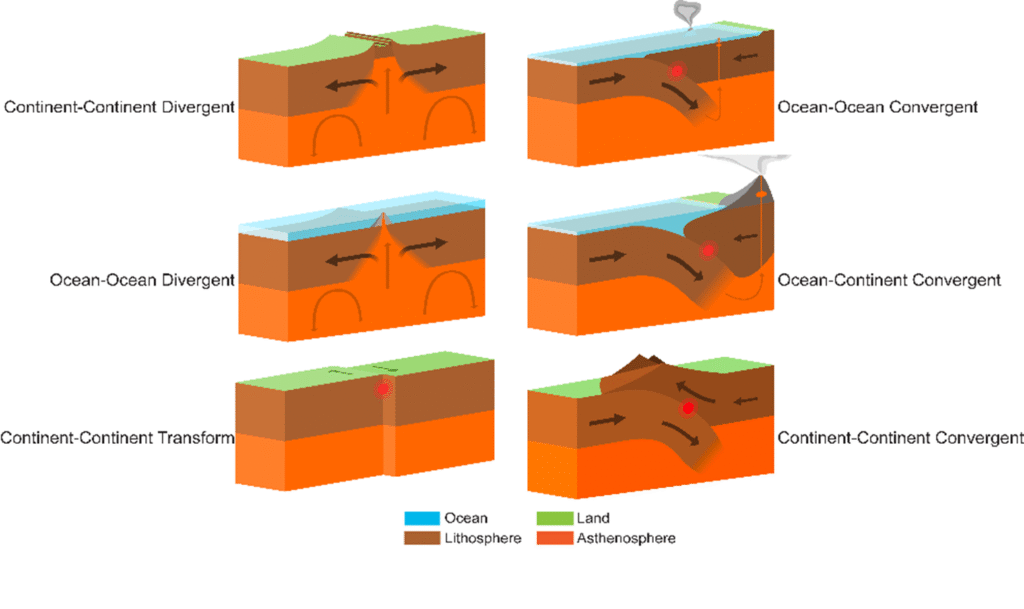
-Volcanic Activity
-Landslides & Rockfalls
2.Human-Induced Causes
–Mining Activities
–Reservoir-Induced Earthquakes
-Nuclear Explosions
* Types of Seismic Waves
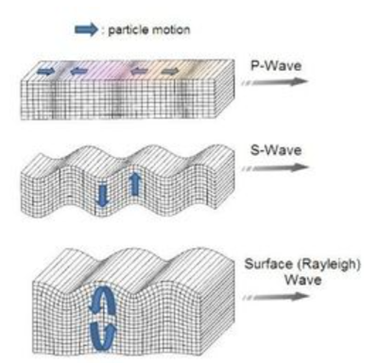
1. Primary (P) Waves
- Fastest waves, travel through solids, liquids, and gases.
- Cause back-and-forth motion of the ground.
2. Secondary (S) Waves
- Slower than P waves, travel only through solids.
- Cause side-to-side motion, damaging buildings.
3. Surface Waves
- Travel along Earth’s surface.
- Cause the most destruction (rolling or swaying motion).
* Safety Measures During Earthquake
– Indoor Measures:
- Take shelter under a strong table or desk.
- Stay away from windows, mirrors, and heavy objects.
- Hold on until shaking stops.
– Outdoor Measures:
- Move to open area, away from buildings, trees, and poles.
- Avoid bridges and power lines.